



Affiliate disclosure: we earn a commission on qualifying Amazon purchases at no extra cost to you. Our picks are research-based. We compiled published test results, maker specs and recovery data; we did not lab-test these heads ourselves.
The best broadheads for deer hunting are the ones your setup can drive through a whitetail: a mechanical like the SEVR Magneto Ti 1.75 for high-energy bows, a tough fixed blade for the rest. At Bowshunting, we matched each pick to a setup, so you’ll leave knowing which head, cut and grain fit your bow.
Quick Picks
Our shortlist of the best broadheads for deer hunting, sorted by job:
- Best overall (vertical bows): SEVR Magneto Ti 1.75
- Best value mechanical: Rage Black Series
- Biggest wound channel: G5 MegaMeat
- Best for penetration: Iron Will S100
- Best budget fixed blade: Magnus Black Hornet
- Best hybrid: Killz Zeus
- Best for crossbows: QAD Exodus Crossbow
Best Broadheads for Deer Hunting Compared
| Broadhead | Type | Cut | Grain | Best for | Buy |
|---|---|---|---|---|---|
| SEVR Magneto Ti 1.75 | Mechanical | 1.75″ | 100 / 125 | Compound and vertical bows | Check price on Amazon |
| Rage Black Series | Mechanical | 2″ | — | Value | Shop on Amazon |
| G5 MegaMeat | Mechanical | 2″ | 100 / 125 | Fast, heavy setups | Shop on Amazon |
| Iron Will S100 / Single Bevel | Fixed | 1-1/16″ + 3/4″ bleeder | 100–200 | Penetration, bone hits | Shop on Amazon |
| Magnus Black Hornet | Fixed (4-blade) | — | 100 | Budget | Shop on Amazon |
| Killz Zeus | Hybrid | 1-1/2″ + 7/8″ bleeders | 100 / 125 | Compound or crossbow | Check price on Amazon |
| QAD Exodus Crossbow | Fixed | 1.25″ | 100 / 125 | Crossbows | Shop on Amazon |
Specs come from the makers, Field & Stream’s spec table and Outdoor Life’s 2026 mechanical test. A dash means we couldn’t verify the figure, so we left it blank.
Best Mechanical Broadheads for Deer
A mechanical broadhead is an expandable head that keeps its blades tucked against the ferrule in flight and opens them on impact. That gives you near field-point flight and a big entry hole. The trade-off is energy, because the blades spend some of it opening.
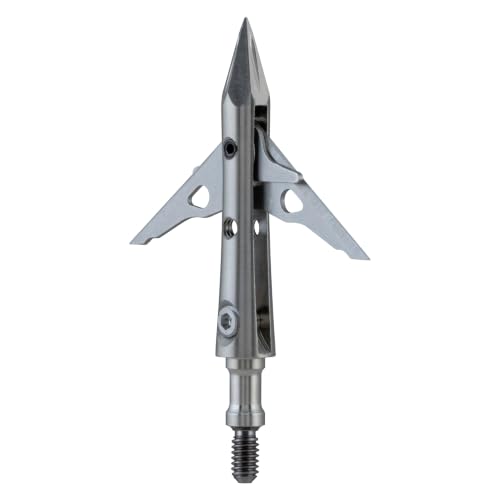
SEVR Magneto Ti 1.75: Best Overall for Vertical Bows
Disclaimer: Prices are at time of the review and subject to change.
SEVR replaced the O-ring on its proven Lock-and-Pivot heads with a rare-earth magnet that holds the blades shut in the quiver, on release and in flight. The ferrule is Grade-5 titanium, the cut is 1.75 inches, and you can choose 100 or 125 grain. Practice Lock lets you shoot the actual head on the range without the blades opening.
In Outdoor Life’s 2026 mechanical test it earned Best Overall: a 2.58-inch group, a 4 of 5 durability score and a perfect 5 for quiet flight, at about $66 for three. SEVR says the Magneto is built for vertical bows only, so crossbow hunters should look further down this list.
Good for: compound hunters who want a reliable big cut without fiddling with O-rings. Not for: crossbows, or a tight budget.
Rage Black Series: Best Value Mechanical
Disclaimer: Prices are at time of the review and subject to change.
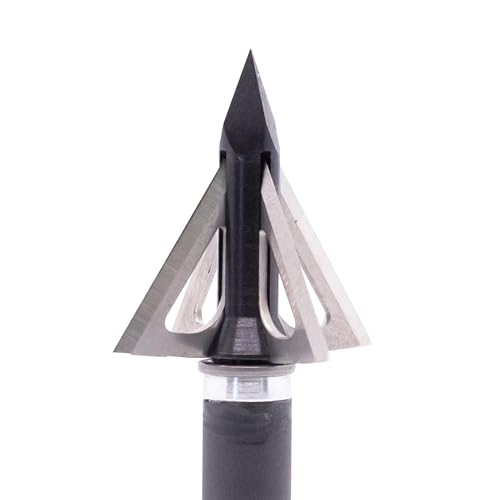
The Rage Black Series cost about $35 for three in Outdoor Life’s test, roughly half the price of the SEVR. It opened a 2-inch blade width and a 1.6-inch entrance wound. The trade-offs showed up elsewhere: 3 of 5 for durability against the SEVR’s 4, and the lowest score in the test for noise, 1 of 5.
Good for: shooters with plenty of kinetic energy who would rather spend money on extra practice heads than premium titanium.
G5 MegaMeat: Biggest Wound Channel
Disclaimer: Prices are at time of the review and subject to change.
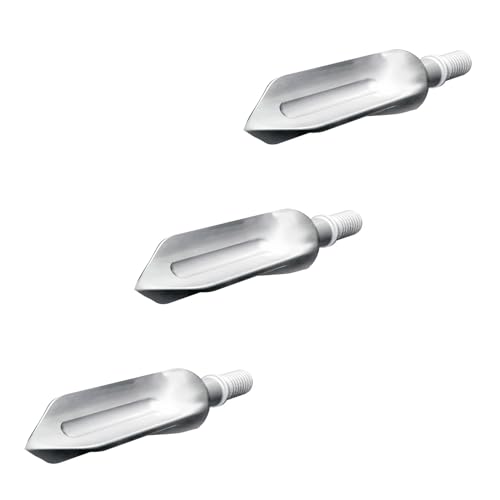
If tracking in thick cover worries you, the MegaMeat is the head to look at. It made the largest entrance wound in Outdoor Life’s 2026 mechanical test, 2.85 inches, from a 2-inch blade, at around $70 for three. A cut that wide needs a setup with energy to spare. See the kinetic-energy table below before you buy.
Best Fixed Blade Broadheads for Deer
Fixed blades fill the other half of our list of the best broadheads for deer hunting. A fixed-blade broadhead has blades that never move. Nothing can fail to open, and it keeps more energy for penetration. The cost is a smaller cut and a bow that has to be tuned properly before the head flies with your field points.
Iron Will S100: Best for Penetration
Disclaimer: Prices are at time of the review and subject to change.
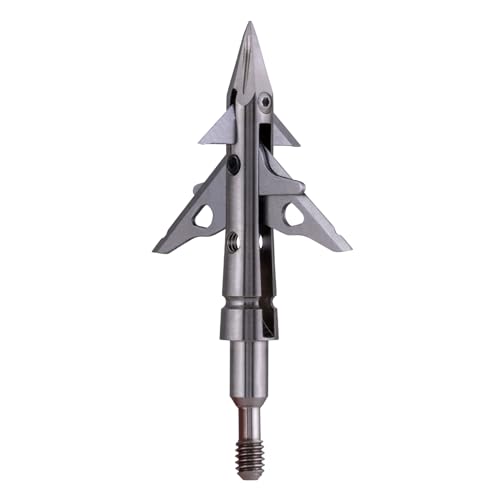
Outdoor Life named the Iron Will S100 its best fixed blade for edge retention and penetration. The Single Bevel version in Field & Stream’s table pairs a 1-1/16-inch main blade with a 3/4-inch bleeder, in weights from 100 to 200 grains and with a .062-inch blade. Lancaster Archery’s guide credits fixed blades this solid with better bone-breaking ability and durability than mechanicals.
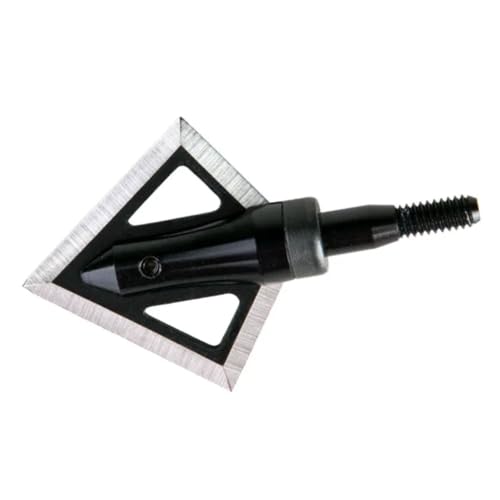
Magnus Black Hornet: Best Budget Fixed Blade
Disclaimer: Prices are at time of the review and subject to change.
Outdoor Life’s budget pick is a four-blade head with a .059-inch main blade, about as thick as fixed blades get. Outdoor Life’s tester said it proved a deer head doesn’t have to be expensive.
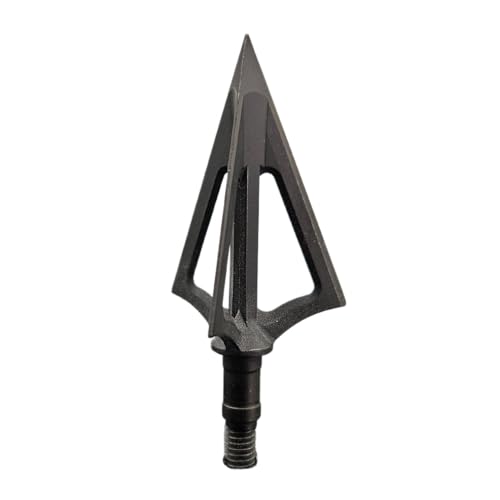
G5 Montec: Best Reusable Fixed Blade
Disclaimer: Prices are at time of the review and subject to change.
Field & Stream’s advice for hunters who tend to hit a little too far forward, toward the shoulder, is to choose a tough fixed head like the G5 Montec. It is a three-blade head with a cut of about 1-1/16 inches, and you sharpen and reuse it rather than replacing blades.
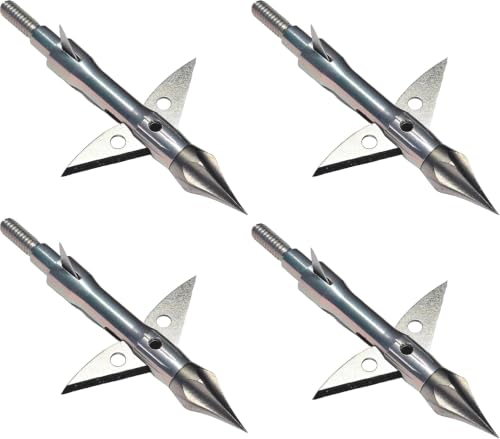
Best Hybrid Broadhead: Killz Zeus
Disclaimer: Prices are at time of the review and subject to change.
A hybrid broadhead combines fixed bleeder blades with expanding main blades, so it cuts on contact and then opens wider. The Killz Zeus line uses a 1-1/2-inch main cut with 7/8-inch bleeders, .035-inch blades, a chisel-style ballistic tip and no O-rings or clips. Killz calls the main blades bone-reactive. The titanium Zeus kit ships with both 100- and 125-grain tips plus a practice head, and Killz rates the line for compound bows and crossbows. Check the listing to confirm which Zeus version you’re buying.
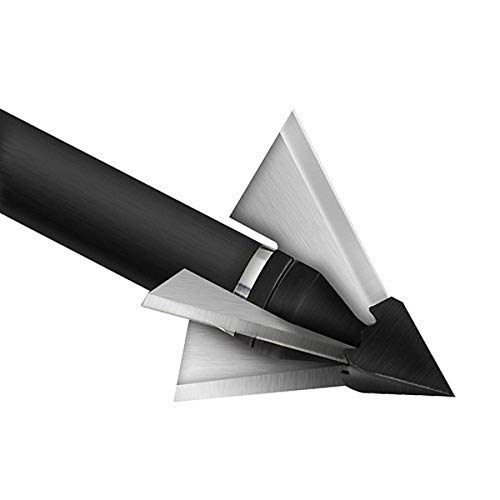
Best Crossbow Broadheads for Deer
Disclaimer: Prices are at time of the review and subject to change.
Crossbows launch bolts much faster than most vertical bows, and that is hard on blade retention. Check that a head is rated for crossbows before it goes on a bolt. The SEVR Magneto above is not.
Field & Stream’s crossbow pick is the QAD Exodus Crossbow, a compact fixed blade with a 1.25-inch cut, a .040-inch blade and a choice of 100 or 125 grain. The Killz Zeus is the hybrid option, since Killz rates it for both bow types. Before you choose, match the head’s grain weight to what your bolts are spined for. Our guide to the best crossbow bolts sorts them by the crossbow they fit. If you’re still choosing the crossbow itself, start with our best crossbows roundup.
Are Cheap Amazon Multi-Packs Worth It?
Amazon’s new-release list is full of six-packs that cost less than one premium head. We’re listing them with a clear verdict: treat them as practice heads until you’ve checked them yourself. Their specs aren’t independently published, so we only repeat what each listing’s title says.
| Listing (as titled on Amazon) | What the title states | Link |
|---|---|---|
| Senduzll 6-Pack Mechanical Expandable Broadheads | Mechanical, six-pack | View on Amazon |
| Broadheads Crossbow Compound 3-Blade Arrowheads | 3-blade, crossbow or compound | View on Amazon |
| Broadhead Mechanical Crossbow Stainless Compound | Mechanical, stainless | View on Amazon |
| Crossbow Broadheads Mechanical Compound Stainless | Mechanical, stainless | View on Amazon |
| ACDSHOT Broadhead Stainless Arrowhead Crossbow | Stainless, crossbow | View on Amazon |
| xxiaojun Broadheads Stainless Broadhead | Stainless | View on Amazon |
| Broadheads Archery Hunting Crossbow Compound | Crossbow or compound | View on Amazon |
| Broadheads Stainless Arrowheads Compound Crossbow | Stainless, compound or crossbow | View on Amazon |
Why the caution? Retail reviews of budget mechanical six-packs report blades that won’t stay closed and packs with mismatched blade sets. Here is a four-step check before any budget head goes in your hunting quiver:
- Spin every head on its arrow. Any wobble means it goes back in the practice box.
- Check blade retention: shake an armed head hard. If a blade drifts open, a branch will open it on the way to the deer.
- Shoot each head at 20 and 40 yards against your field points, one head at a time.
- Count parts. Every head should have the same blades and the same O-rings or clips.
A pack that passes all four is one of the best budget broadheads you can find, and fit to hunt alongside the best broadheads for deer hunting above. A pack that fails costs you $15, which is cheaper than a lost buck.
Mechanical vs Fixed Blade Broadheads: Which Recovers More Deer?
Most guides settle this argument with opinions. There is real data, and few of the guides ranking for this query cite it.
Grand View Outdoors reported on a bowhunter survey by researcher Pedersen covering 209 bowhunters. Hunters using fixed or replaceable-blade heads recovered 82% of the deer they hit (874 of 1,066). Mechanical users recovered 91% (209 of 230). Among crossbow hunters the gap widened: 96% with mechanicals against 82% with fixed blades.
Read those numbers with care. The data is self-reported, and the mechanical sample is much smaller. Our take is that it supports mechanicals for the average hunter with an average setup, a point Outdoor Life’s own commentary also makes. It doesn’t override physics when energy is low or a bone hit is likely.
| Mechanical | Fixed blade | |
|---|---|---|
| Flight | Close to field points | Needs a well-tuned bow |
| Cut | Large (1.5–2″+) | Moderate (usually under 1.5″) |
| Penetration | Loses energy opening the blades | Keeps more energy |
| Failure risk | Blades can open early or fail to open | No moving parts |
| Bone hits | Unsupported blades can break | Thick blades hold up |
| Reuse | Replace blades | Resharpen |
How Much Kinetic Energy Do You Need for Each Broadhead Type?
Kinetic energy (KE) is the energy your arrow carries at impact, measured in foot-pounds. It decides which of the best broadheads for deer hunting you can actually shoot, and most roundups never give you the method. Here it is:
KE (ft-lb) = arrow weight in grains × speed in fps² ÷ 450,800
| Your setup | Reference point | Recommended head | Broadhead cutting diameter for deer |
|---|---|---|---|
| Low draw weight, short draw, traditional bows | Easton, as cited by Bowsite, says a 400-grain arrow at 170 fps (about 26 ft-lb) can take a mature deer | Fixed blade | Modest, around 1″ to 1-1/8″ |
| Compound at 55 lb or more | HuntWise sets 55 lb as the floor for mechanicals | Fixed, hybrid or small mechanical | Up to about 1.5″ |
| About 65 ft-lb and up | Grim Reaper asks for at least 65 ft-lb for its 2″ Whitetail Special | Any type, including big-cut mechanicals | Up to 2″ |
| 28″ draw, 70 lb, 450 gr arrow, 330 fps-rated bow | Lancaster Archery puts this at about 75 ft-lb, enough to pick any style | Your choice | Up to 2″ |
The rule we use: shoot the biggest cut your energy can push all the way through, then step down one size if you hunt big-bodied deer or shoot from steep tree-stand angles. Small mechanicals under 1-1/2 inches, as Bowhunting.com’s guide notes, penetrate about as well as most fixed blades. That is why they are a safe middle ground.
Which Broadhead Fits Which Shot?
Even the best broadheads for deer hunting only work when they’re matched to the shot you’re likely to get.
- Broadside, under 30 yards, a high-energy compound: any quality mechanical. Take the big cut.
- Quartering-to, or you tend to hit forward: a tough fixed blade like the G5 Montec or Iron Will, as Field & Stream recommends.
- Long-range practice past 40 yards: mechanicals group closer to field points. Confirm the hold with a rangefinder built for bow hunting.
- Thick cover where tracking is hard: the widest cut your KE supports. Pair it with binoculars for bow hunting to read the hit before you get down.
- Crossbow from a ground blind: a crossbow-rated fixed blade or hybrid, matched to your bolt’s grain spec.
How We Chose These Broadheads
Bowshunting doesn’t lab-test broadheads, so this is a research-based guide. Every spec and test result above comes from a named source: maker spec sheets from SEVR and Killz, Field & Stream’s spec table and Outdoor Life’s 2026 mechanical test. The recovery data comes from the Pedersen survey as reported by Grand View Outdoors. To rank the best broadheads for deer hunting, we weighted four things: proven wound size, durability, flight close to field points, and whether a head matches a realistic deer setup. If we couldn’t verify a figure, we left it out rather than estimate it.
Key Takeaways
- Energy decides the head. Work out your KE before you compare brands.
- Mechanicals recovered more deer in the Pedersen survey (91% vs 82%), but they need the energy to open and penetrate.
- Fixed blades win on bone and on low-energy setups. The Iron Will S100 and G5 Montec are proven choices.
- The SEVR Magneto Ti 1.75 is our top pick for compound hunters. The Killz Zeus covers crossbows and hybrid fans.
- Treat budget six-packs as practice heads until each one passes the four-step check.
Before you settle on any of the best broadheads for deer hunting, make sure your setup can drive it. Start with our best compound bows guide if you’re upgrading, or brush up with how to shoot a crossbow safely and accurately. Then check today’s price on the SEVR Magneto Ti 1.75.
Frequently Asked Questions
What grain broadhead for deer is best?
100 or 125 grain covers nearly every deer setup. Game & Fish notes that 100-grain mechanicals under 2 inches are the most popular deer choice. A 125-grain head adds front-of-center weight and momentum, but it needs an arrow spined to carry it. Match the grain to what your bow tunes with, then confirm your KE.
Are hybrid broadheads good for deer?
Yes, if your setup has the energy. Hybrid broadheads for deer like the Killz Zeus cut on contact with fixed bleeders, then open larger main blades. You still get a wound if the mechanical blades fail to open. North American Whitetail’s advice is to shoot hybrids only with enough draw weight.
Can you use compound bow broadheads in a crossbow?
Only if the maker rates them for crossbows. Crossbow speeds can open or damage blades designed for vertical bows. SEVR, for example, rates the Magneto for vertical bows only.
Do I need to practice with broadheads?
Yes. Shoot the exact head, or its matching practice head, before the season. As HuntWise notes, most mechanicals ship with a practice head for this, and fixed blades in particular reveal tuning problems that field points hide. Our step-by-step guide on how to shoot a compound bow covers the form basics.
What is the minimum cutting diameter for deer?
Rules vary by state, so check your state wildlife agency’s regulations first. In practice, most deer heads cut between 1 and 2 inches, and the right size is the largest your kinetic energy can push through both lungs.
Are mechanical broadheads more accurate than fixed blades?
They usually fly closer to field points, because the blades sit tucked inside the ferrule. A well-tuned bow can group fixed blades just as tight. If you don’t retune every season, a mechanical is the more forgiving choice.
